






Pilates for Beginners: The Most Important Basics & Exercises
Pilates is one of the best training methods for specifically improving strength, flexibility, and body awareness – and it does so in a particularly joint-friendly way. No wonder this gentle yet highly effective method is currently experiencing a real boom.
But what exactly is Pilates? How does it help reduce back pain, improve posture, and activate the deep muscles? And which exercises are best for getting started?
This article will tell you everything you need to know about Pilates for beginners – from the most important basics to effective exercises to get started.
What is Pilates and why is it so effective?
Pilates was developed by Joseph Pilates in the 1920s and was originally used as rehabilitation training for dancers. Today it is one of the most popular methods for strengthening the body holistically.
What makes Pilates special is the combination of controlled movements, conscious breathing, and targeted muscle building. It doesn't just train individual muscle groups, but improves the entire body structure – especially the deep core muscles, which ensure a healthy posture.
The benefits of Pilates at a glance
- Strengthens the deep muscles – especially the abdomen, back and pelvic floor are intensively trained.
- Improves posture – Ideal for preventing and relieving back pain
- Increases flexibility and mobility – Promotes a supple and healthy body structure
- Joint-friendly training – Perfect for every fitness level, regardless of age or experience
- Reduces stress and promotes mindfulness – Conscious breathing helps to relax the mind.
Just two to three Pilates sessions per week are enough to achieve noticeable progress – both physically and mentally.
Pilates for Beginners: The Most Important Basics
Before you start training, you should consider some basic principles that make Pilates particularly effective.
1. The six principles of Pilates
Pilates is based on six basic principles that accompany every movement:
1️⃣ Concentration: Full attention to the exercise – every movement is performed consciously.
2️⃣ Control: No jerky movements, but precise, fluid processes.
3️⃣ Centering: All movements originate from the “powerhouse” – the center of the body.
4️⃣ Breathing: Deep, conscious breathing supports the quality of movement.
5️⃣ Precision: Quality over quantity – every movement is executed precisely.
6️⃣ Fluid movement: No abrupt changes, but harmonious transitions.
2. Proper breathing
Breathing is a central component of Pilates. Lateral breathing increases oxygen intake and helps release tension. Consciously breathe in into the sides of your ribcage and exhale in a controlled manner – without relaxing your abdominal muscles.
3. Activate the powerhouse
The powerhouse refers to the deep muscles around the abdomen, back, and pelvic floor. Every movement should be controlled from here to achieve maximum stability and effectiveness.
4. The right equipment
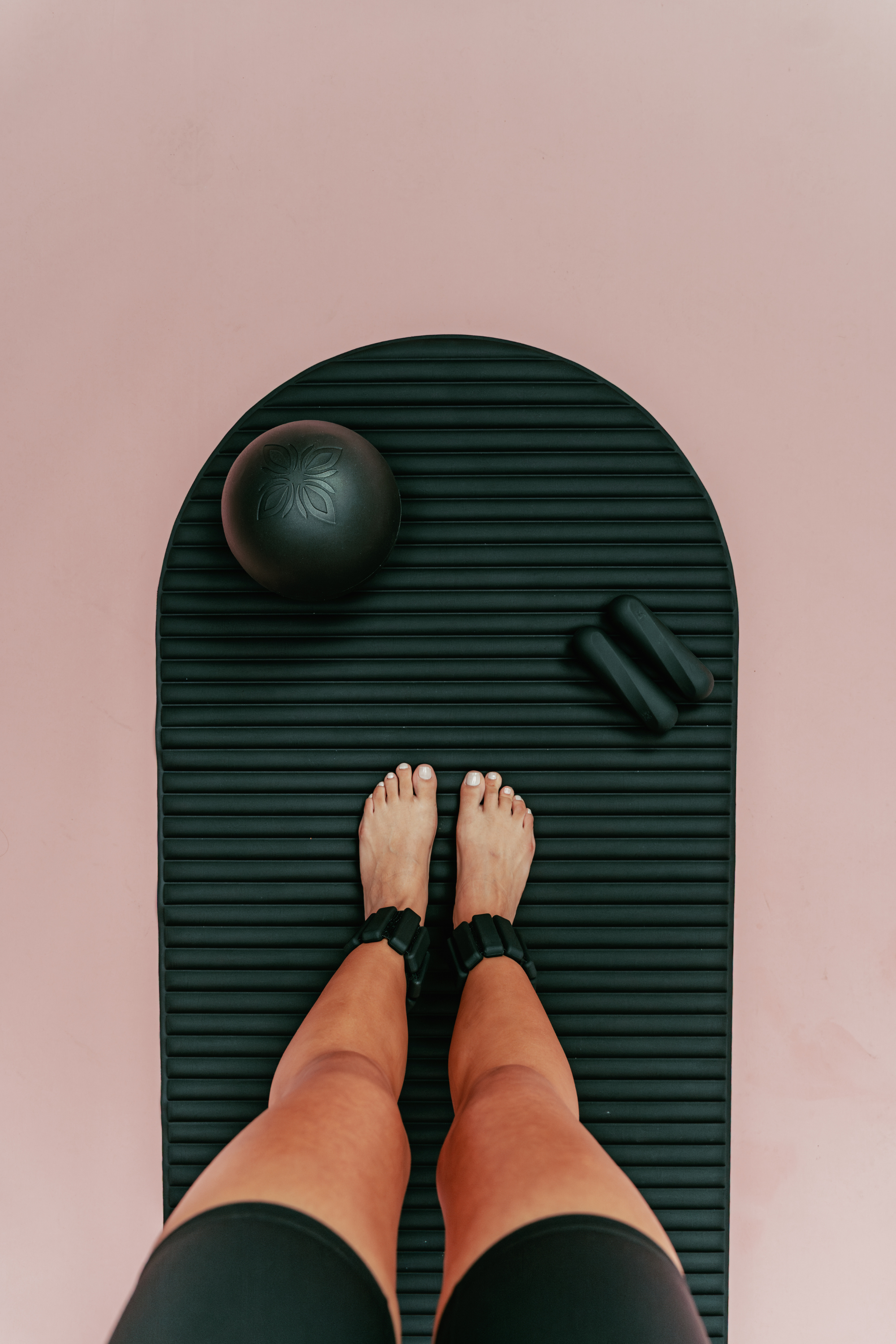
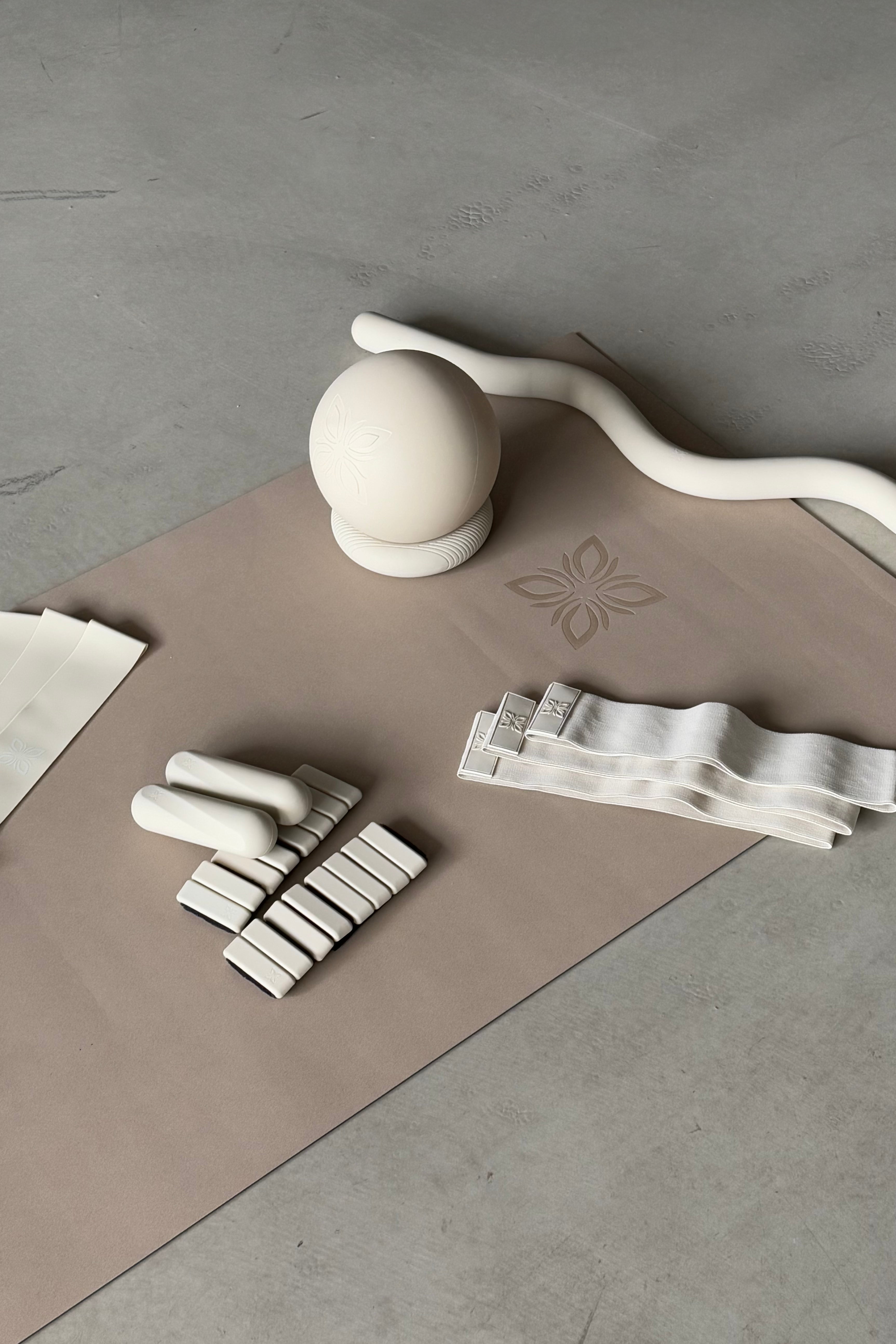
A non-slip Pilates mat is sufficient to get started. Those who want to intensify their training can work with Pilates rings , resistance bands or small balls .
5 effective Pilates exercises for beginners
You can get started right away with these simple yet effective exercises. They will help you learn the basics of Pilates, gently build your muscles, and feel your first progress.
1. The Hundred – The classic breathing exercise
Perfect for: Strengthening the core and improving breathing
- Lie on your back, raise your legs to a 90-degree angle.
- Slightly raise your head and shoulders, extend your arms parallel to the floor.
- Move arms up and down 100 times (5 breaths in, 5 out)
Benefits: Activates abdominal muscles and improves breathing control
2. Roll-Up – The gentle abdominal exercise
Perfect for: Strengthening the core & mobilizing the spine
- Lie flat on your back, legs straight, arms extended behind you
- Bring your arms forward as you inhale, roll them up slowly as you exhale.
- Roll back down in a controlled manner
Benefits: Improves mobility and strengthens abdominal muscles
3. Single Leg Stretch – For more stability
Perfect for: Strengthening the core and hip mobility
- Lie on your back, lift your head slightly.
- Pull one knee towards your chest, keep the other leg straight.
- Alternate legs (10-15 repetitions per side)
Benefits: Promotes balance and coordination
4. Shoulder Bridge – Strengthens back & legs
Perfect for: Strengthening the posterior muscle chain
- Lie on your back, legs bent, arms next to your body
- Lift your pelvis until your body forms a straight line.
- Hold for a few seconds, then lower slowly.
Benefits: Stabilizes the lower back and strengthens the buttocks and legs
5. Side-Leg Circles – For strong legs & better balance
Perfect for: Leg & hip muscles
- Lie sideways on the mat, using your lower arm as a headrest.
- Lift your upper leg and draw small circles in the air.
- 10 times in one direction, then change direction
Benefits: Promotes stability and mobility
How to integrate Pilates into your everyday life
Pilates is a flexible workout that you can easily integrate into your daily routine.
💡 Tips for a successful start:
- Start with short sessions – 15-20 minutes is enough.
- Use the right equipment – A Pilates mat provides stability.
- Use training aids – Pilates rings or resistance bands intensify the workout.
- Keep at it – consistency is crucial for progress
Conclusion: Pilates as an effective way to develop a stronger sense of one's body.
Pilates is the perfect training method for anyone who wants to specifically strengthen their muscles, improve their posture and relieve tension.
With controlled movements, conscious breathing and targeted resistance, the training can be optimally adapted – whether with resistance bands , weight cuffs or weight rings .
Those who train regularly will quickly notice progress – not only in the form of stronger muscles, but also through improved balance and better posture in everyday life.
